Monerica Blog - Articles
Feather Wallet Virus
 July 16th, 2026
Is Feather Wallet a virus? No, it is a false positive. Why Windows Defender flags this open-source Monero wallet, and how to verify and safely restore it.
Swap XMR to LTC
 July 22nd, 2026
How to swap XMR to LTC (and LTC to XMR) with no KYC: use a non-custodial swap aggregator or an in-wallet swap. Step-by-step, fees, and privacy tips.
Monero Gift Cards
 July 15th, 2026
Monero gift cards let you spend XMR at thousands of retailers without cashing out to a bank. How they work, what you can buy, and how to buy them safely.
Monero Mining Guide
 July 27th, 2026
Can you still mine Monero in 2026? A plain-English RandomX CPU mining guide — the hardware that matters, realistic payouts, and tools to check profitability.
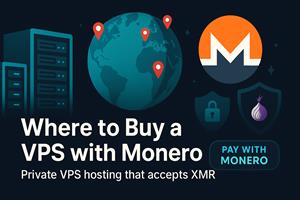
Where to Buy a VPS with Monero
 August 16th, 2026
Three no-KYC VPS hosts that accept Monero (XMR) in 2026 — BTCVPS, MyNymBox & Servers Guru — what each offers, plus how to pay for a VPS anonymously.
Monero Estate Planning
 July 30th, 2026
Retirement and inheritance planning for Monero: the custody options and how to pass your XMR on safely without losing access.
Monero for Beginners
 July 27th, 2026
New to Monero? This beginner guide covers wallets, buying your first XMR, and spending it privately, step by step, in about 15 minutes.
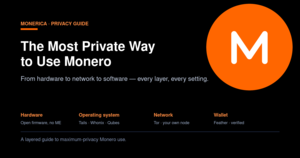
Most Private Monero Setup
 July 7th, 2026
A complete guide to the most private way to use Monero: open-source hardware and Intel ME, Tails, Whonix and Qubes OS, Tor, Wi-Fi, and every wallet setting.
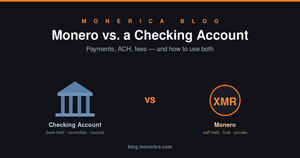
Monero vs. a Checking Account
 July 7th, 2026
How Monero and a checking account compare for payments and money management - ACH, push vs pull, fees, what each can and can't do, and how to use both.
Monero Network Fees
 July 7th, 2026
How Monero's network fees work - what they pay for, how they're calculated from transaction size and priority, and why they stay low.